Scenic Mountain Passes
European alpine rail corridors represent the intersection of civil engineering ingenuity and dramatic topography. Rather than tunneling straight through all mountain ranges at high velocity, classic alpine rail lines climb switchback inclines, traverse historic curved masonry viaducts, and cross high watershed divides, providing transit connectivity alongside panoramic landscapes.
The Rhaetian Railway and Bernina Corridor
The Rhaetian Railway (RhB) operates across the Swiss canton of Graubünden, running narrow-gauge (1,000 mm) lines designated as UNESCO World Heritage sites. The crown jewel is the Bernina line, linking St. Moritz with Tirano in Italy. At the Ospizio Bernina station, trains reach an elevation of 2,253 meters above sea level without rack-and-pinion assistance, relying purely on adhesion traction across gradients as steep as 7%.
The route navigates landmark structures including the circular Brusio Viaduct, where trains curve 360 degrees to manage rapid elevation loss, and the dramatic Landwasser Viaduct on the Albula section, leading directly into a sheer cliffside tunnel.
The Gotthard Axis: Base Tunnel vs. Mountain Panorama
The Gotthard transit corridor between Arth-Goldau and Bellinzona presents rail travelers with two distinct choices:
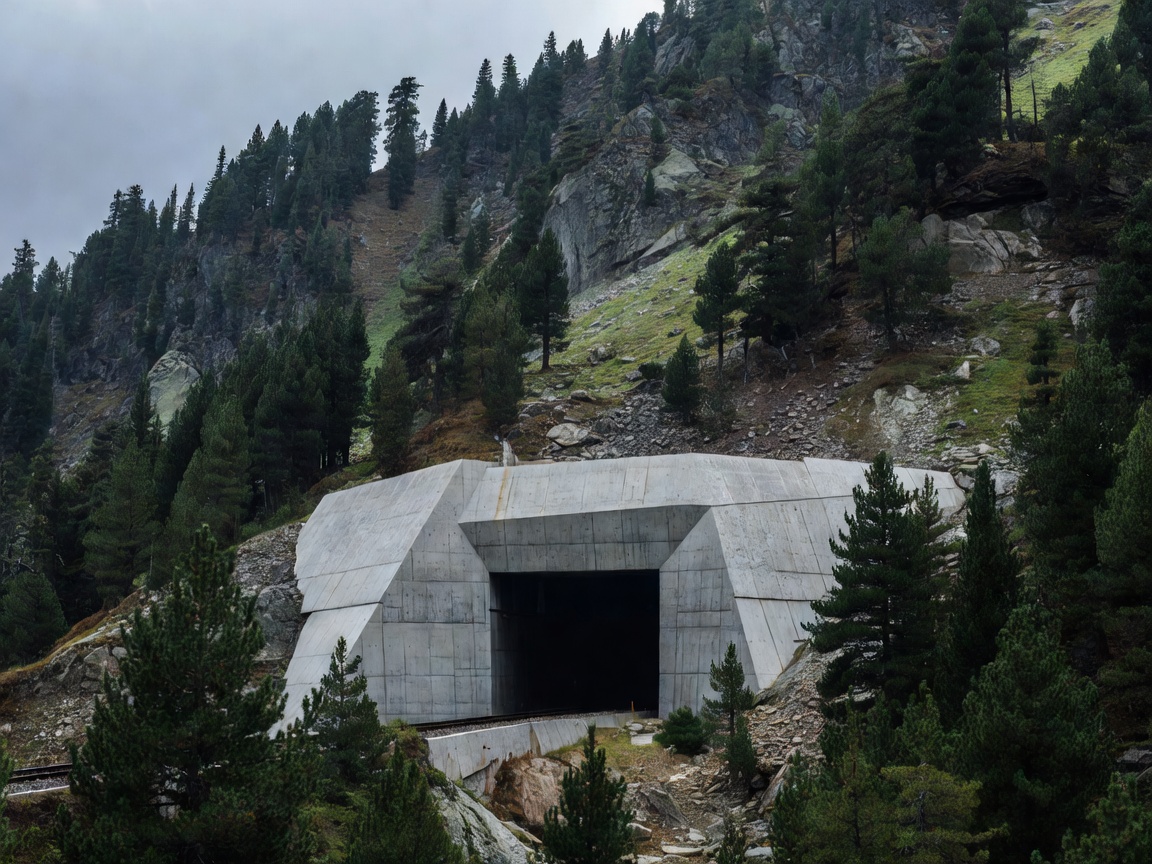
- The Gotthard Base Tunnel: At 57.1 kilometers, it is the world’s longest and deepest railway bore. High-speed EuroCity trains bypass mountain topography entirely, darting underneath towering granite peaks in approximately 20 minutes to connect Zurich and Milan.
- The Gotthard Mountain Route: The classic 1882 line traverses spiral loop tunnels around Wassen, passing its famous baroque church three times from ascending elevations before piercing the 15-kilometer summit tunnel. Regional 'Treno Gottardo' services operate hourly along this scenic historical route.
The Semmering and Arlberg Lines in Austria
Austria’s eastern Alps were conquered rail-wise in 1854 with the opening of Carl Ritter von Ghega's Semmering Railway, connecting Gloggnitz to Mürzzuschlag. Designed for steam locomotives over steep mountain saddles, the Semmering incorporates 16 viaducts and 15 tunnels, representing Europe’s earliest standard-gauge mountain route.
To the west, the Arlberg Railway runs east-west between Innsbruck Hauptbahnhof and Bludenz, passing through the 10.6-kilometer Arlberg Tunnel. It links Tyrol to Vorarlberg and Switzerland, serving as the primary corridor for Railjet trains that wind past rugged limestone peaks and remote alpine pastures.
The West Highland Line and Black Forest Passes
Scenic mountain railways extend well beyond the Alps. In the Scottish Highlands, the West Highland Line links Glasgow Queen Street to Fort William and Mallaig, crossing the desolate Rannoch Moor before curving across the 21-arch Glenfinnan Viaduct.
In southwestern Germany, the Schwarzwaldbahn (Black Forest Railway) snakes between Offenburg and Singen, using double-loop spiral tunnels around Triberg to conquer dense pine-covered ridges. Regional double-deck trains operate regularly over this route, accessible via standard regional tickets without mandatory surcharges.
Routing Strategy for Travellers
When engineering an itinerary, balance route speed against visual experience. Booking standard regional trains (such as Swiss RegioExpress or Austrian REX services) along historic mountain passes offers opening windows, flexible seating, and lower ticket costs compared to premium panoramic observation trains like the Glacier Express or Bernina Express.
Connected Infrastructure Guides
Discover additional operational rail topics: